
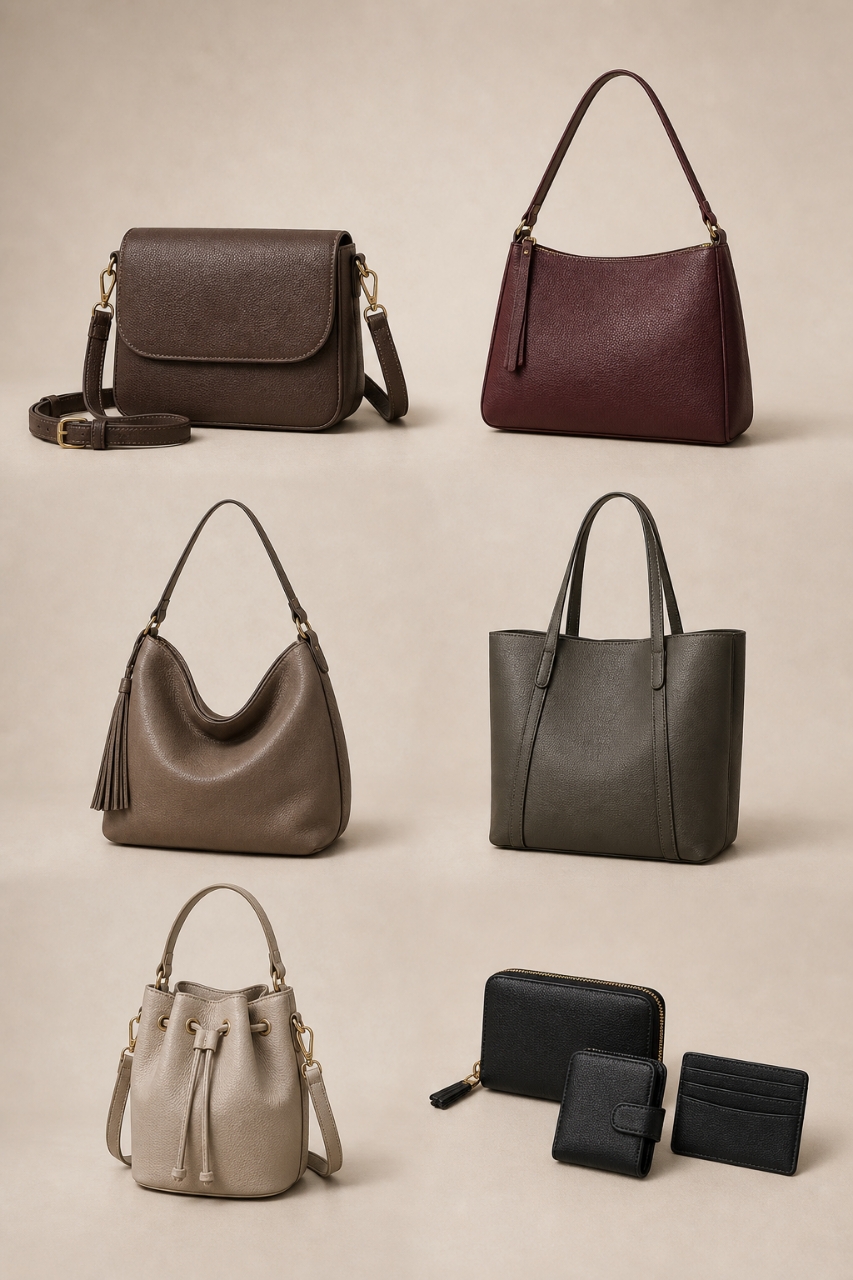
Almost every first conversation between a European brand and a Chinese handbag factory reaches the same question within minutes: what is your MOQ? The number matters, but the reasoning behind it matters more. Once a brand understands where the minimum comes from, it becomes much easier to negotiate—and to decide when paying a little more for a smaller run is actually the safer choice.
Why handbag factories set minimum order quantities
An MOQ is the smallest order on which a factory can keep its promises on price, quality and delivery. Three forces create it.
Material purchasing minimums
PU and vegan leather is bought by the metre, genuine leather by the hide. Material suppliers apply their own minimums, especially for custom colours, embossing or special finishes. If one order needs less than a full material lot, the leftover cost and storage land somewhere—usually in the unit price.
Component and hardware minimums
Zips, locks, rings and logo plates come from specialist component suppliers. Custom plating colours or logo-engraved pulls frequently carry minimums of 1,000 pieces or more, because each new finish means a separate plating or casting run.
Production-line setup
Every style requires pattern preparation, cutting dies, machine settings, worker training and a first-piece review. That setup time is roughly the same whether the order is 100 pieces or 1,000, so very small runs carry a disproportionate cost per unit—and leave less room to absorb the normal loss rate of cutting and stitching.
A factory that quotes an unusually low MOQ is not necessarily more flexible; it may simply be planning to recover the setup cost inside a higher unit price, or quietly limiting you to stock materials and existing hardware. Conversely, a higher MOQ from a well-organised factory often comes with more stable quality, because the order is large enough to justify proper material control, first-piece review and inline inspection at every stage.
What actually drives the MOQ you are quoted
Two brands can ask the same factory for the same bag and receive different minimums. The difference is almost always in the specification, not in the factory's mood. These are the variables that move the number:
Outer material
Stock-market PU available in Guangzhou can keep minimums low, sometimes 100–200 pieces. Custom-dyed, custom-embossed or certified recycled materials raise the minimum because the material mill sets its own quantity floor.
Number of colourways
Material minimums apply per colour. Three colourways at 100 pieces each can be harder to produce than one colourway at 300, even though the total is identical.
Hardware and branding
Standard zips and unbranded fittings keep the MOQ down. Custom logo hardware, special plating shades and new moulds introduce component-level minimums that the factory cannot absorb on a small order.
Style complexity
A tote with ten pattern pieces runs efficiently in a small batch. A structured bag with forty pieces, piping, edge paint and multiple closures needs more line setup, so the workable minimum rises.
Size range and assortment
Every additional size repeats grading, cutting preparation and parts control. A tight assortment keeps the minimum low; a wide one spreads the same quantity across more work.
Order structure
Factories plan in production lots. One style at 300 pieces is simpler to schedule than six styles at 50 pieces, and the quoted MOQ will reflect that difference even when total volume is equal.
Notice what is not on this list: your negotiating skill. A factory does not lower its minimum because a buyer pushes harder on email. The minimum moves when the specification changes—fewer colours, stock materials, standard hardware, a tighter size range. Brands that treat MOQ as a design decision get much further than brands that treat it as a price negotiation.
It also helps to separate two different numbers that are often quoted as one. The first is the factory's own production minimum, driven by line setup. The second is the supply-chain minimum passed on from material and component suppliers, which the factory genuinely cannot control. When a quoted MOQ seems high, asking which of the two is driving it usually turns a dead-end conversation into a practical one.
How to plan and negotiate a first order around MOQ
The most productive MOQ conversation starts from your sell-through plan, not from the factory's number. Work out what quantity your channels can realistically move in one season, then shape the specification to fit it.
Consolidate the brief
Fewer colourways, one size and stock materials can bring a first order into the 100–300 piece range without surcharges, while keeping the product itself unchanged.
Use stock materials first
Reserve custom-dyed or embossed materials for the repeat order, once sell-through data justifies the material mill's minimum. Sampling can still trial the custom direction in parallel.
Ask for tiered pricing
Request quotes at two or three quantities—for example 300, 500 and 1,000 pieces. The price steps show exactly what a larger commitment buys and make the MOQ decision a commercial comparison rather than a guess.
Consider a paid trial run
Many factories accept a below-MOQ trial order at a transparent surcharge. For a first cooperation, paying slightly more per unit to test workmanship, communication and delivery is often cheaper than a large order with an untested partner.
Raise MOQ early, at sampling stage
The right moment to align on quantity is when the sample brief is agreed—not after development is finished. Material and hardware choices made at sampling stage decide what MOQ is even possible later.
What to send the factory first
- Reference images or a tech pack for each style
- Material direction: stock PU, genuine leather or certified alternatives
- Planned colourways and size range per style
- Target retail price or target unit cost
- Estimated quantity per style and per season
- Target delivery window and destination market
Questions brands often ask
Can a handbag factory produce below its stated MOQ?
Often yes, but expect a trade-off. Below-MOQ orders usually carry a surcharge, are limited to stock materials and existing hardware, and may wait to be combined with another run of the same material. Ask what changes at the lower quantity instead of asking only for a lower number.
Is a lower MOQ always better for a new brand?
Not necessarily. A very low minimum can hide a higher unit cost, fewer material choices and less production-line attention. For a first order, the right question is whether the quantity matches a realistic sell-through plan—not whether it is the smallest number available.
What is a typical MOQ for PU handbags from a Guangzhou factory?
For stock-market PU materials and standard hardware, many Guangzhou factories start around 100–300 pieces per style per colour. Custom-dyed or custom-embossed materials, custom logo hardware and new moulds push the minimum higher, because the component suppliers apply minimums of their own.