
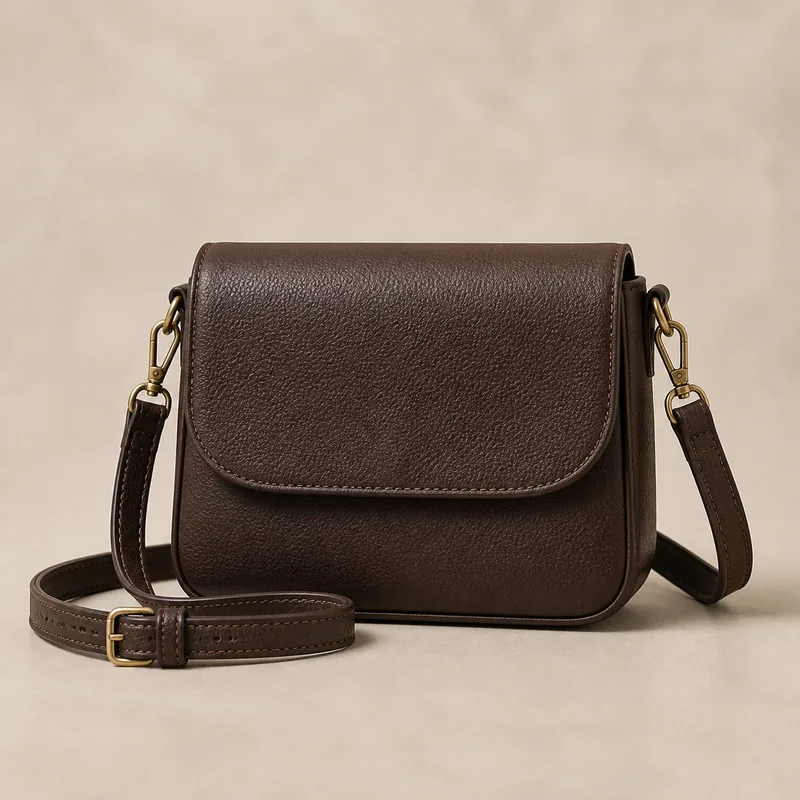
Ask any brand's customer service team what breaks first on a handbag, and the answer is rarely the material—it is the hardware. A zip that sticks, a clasp that loses its plating, a ring that scratches dark: these are the defects customers photograph and return. Yet hardware is often the least specified part of the tech pack. This article covers what to define for metal fittings and zips before production starts.
Specifying metal hardware
"Gold hardware" is a direction, not a specification. A factory receiving those two words must guess at the metal, the plating shade, the attachment method and the quality level—and each guess is a potential dispute. A usable hardware specification defines five things:
Base metal
Zinc alloy is the industry default: castable into complex shapes, it plates well and holds cost down. Brass is heavier and more corrosion-resistant at a higher price; iron is the budget option and the most prone to rust in humid climates. State the metal explicitly for every component group.
Plating shade and finish
Light gold, champagne, gunmetal, brushed nickel—the names matter less than the physical standard. Approve one signed metal swatch and require every component to match it, because locks, rings, chains and zips often come from different suppliers.
Dimensions and weight
Ring diameters, clasp sizes, chain gauge and strap-clip opening width all affect function and look. Hardware weight also shapes perceived quality: customers read heft as value, and hollow castings feel different from solid ones.
Attachment method
Riveted, screwed, prong-set or sewn-in fittings behave differently in use and in repair. Screwed fittings allow replacement; prong-set fittings are cleaner but permanent. Choose per component, not by factory default.
Logo application
Engraved or cast logos on plates and pulls require moulds and carry supplier minimums—often 1,000 pieces. Confirm logo size, orientation and placement on a physical sample before the mould is cut, because mould corrections cost time and money.
One sourcing note that saves real money: standard hardware in your approved plating shade delivers most of the custom look without mould charges or supplier minimums. Reserve custom-moulded pieces for the one or two components customers actually touch and photograph—the main clasp and the zip pull—and keep everything else on proven standard parts. This concentrates the budget where the brand is visible and keeps the order inside a practical MOQ.
Getting zip specifications right
Zips are the highest-use component on most handbags, and the most frequently returned when wrong. A complete zip specification covers five points:
Zip type
Coil (nylon) zips run smoothly and suit interior pockets and flexible panels. Metal zips give a premium look and suit main closures on structured bags. Invisible zips disappear into a seam for clean exteriors. Match the type to the position, not the price list.
Size
Zip sizes—#3, #5, #8, #10—describe the tooth width in millimetres. #3 suits pockets, #5 is the general handbag standard, #8 and above suit main closures on larger or heavier styles. Undersized zips on main closures are a classic failure point.
Slider and puller
Specify locking or non-locking sliders, the puller shape, and whether the puller carries a logo. Custom pullers are cast items with their own minimums; standard pullers in your plating shade achieve most of the look at a fraction of the cost.
Tape colour
The fabric tape should match the lining or the outer material deliberately—not approximately. Provide the colour reference with the zip order; "black" tapes vary visibly between suppliers.
Performance expectations
State what the zip must survive: smooth one-hand operation, no catching on lining, and a defined number of open-close cycles. Branded zips document this; unbranded zips should be tested on the actual bag before bulk.
Testing and compliance for hardware
European market access puts chemical and durability requirements on metal components. The practical ones to plan for:
Nickel release
Metal parts in prolonged skin contact must meet nickel-release limits under REACH. Specify nickel-free plating where straps, chains or decorative fittings touch skin, and keep the supplier's test documentation with the order file.
Corrosion resistance
Salt-spray testing simulates how plating survives humidity and perspiration. Agree a target—commonly 24 to 48 hours for handbag fittings—and test the actual production plating, not a showroom sample.
Pull and attachment strength
Rings, clips and strap anchors should withstand defined pull loads without deformation. A dropped bag concentrates force on its fittings; test loaded, not empty.
Colour transfer and rub fastness
Plated surfaces and zip tapes should not mark light linings or clothing. Rub testing on production materials catches this before customers do.
None of these tests is exotic or expensive at sample stage. All of them become expensive after 500 bags have shipped. Hardware testing belongs in the development calendar, not in the claims inbox.
The one-page hardware spec to send
- Component list with base metal, dimensions and quantity per bag
- Signed plating standard and the shade name per component
- Attachment method per fitting, with repairability noted
- Zip type, size, slider, puller and tape colour per position
- Logo application method, position and mould responsibility
- Required tests: nickel release, salt spray, pull strength, rub fastness
Questions brands often ask
What is the difference between zinc alloy and brass handbag hardware?
Zinc alloy is the industry default: cast into complex shapes, plated well and cost-effective. Brass is heavier, more corrosion-resistant and holds fine engraving better, at a higher price. Iron fittings are the budget option and the most prone to rust in humid climates. For most mid-market European brands, quality zinc alloy with good plating is the practical choice.
How do brands keep hardware colour consistent across components?
Approve one physical plating standard—a signed metal swatch or sample set—and have every component supplier match it, because lock, ring, zip and chain often come from different makers. Specify the plating by name (for example light gold, gunmetal, brushed nickel) and confirm under agreed lighting, not by photo.
Do handbag zips need a branded maker such as YKK?
Not necessarily. Branded zips offer documented consistency and are worth specifying for premium or high-stress styles. Quality unbranded zips from established Guangdong suppliers perform well in normal use when the specification covers size, slider action, tape colour and pull strength—and cost significantly less. Match the choice to the bag's price point and stress profile.